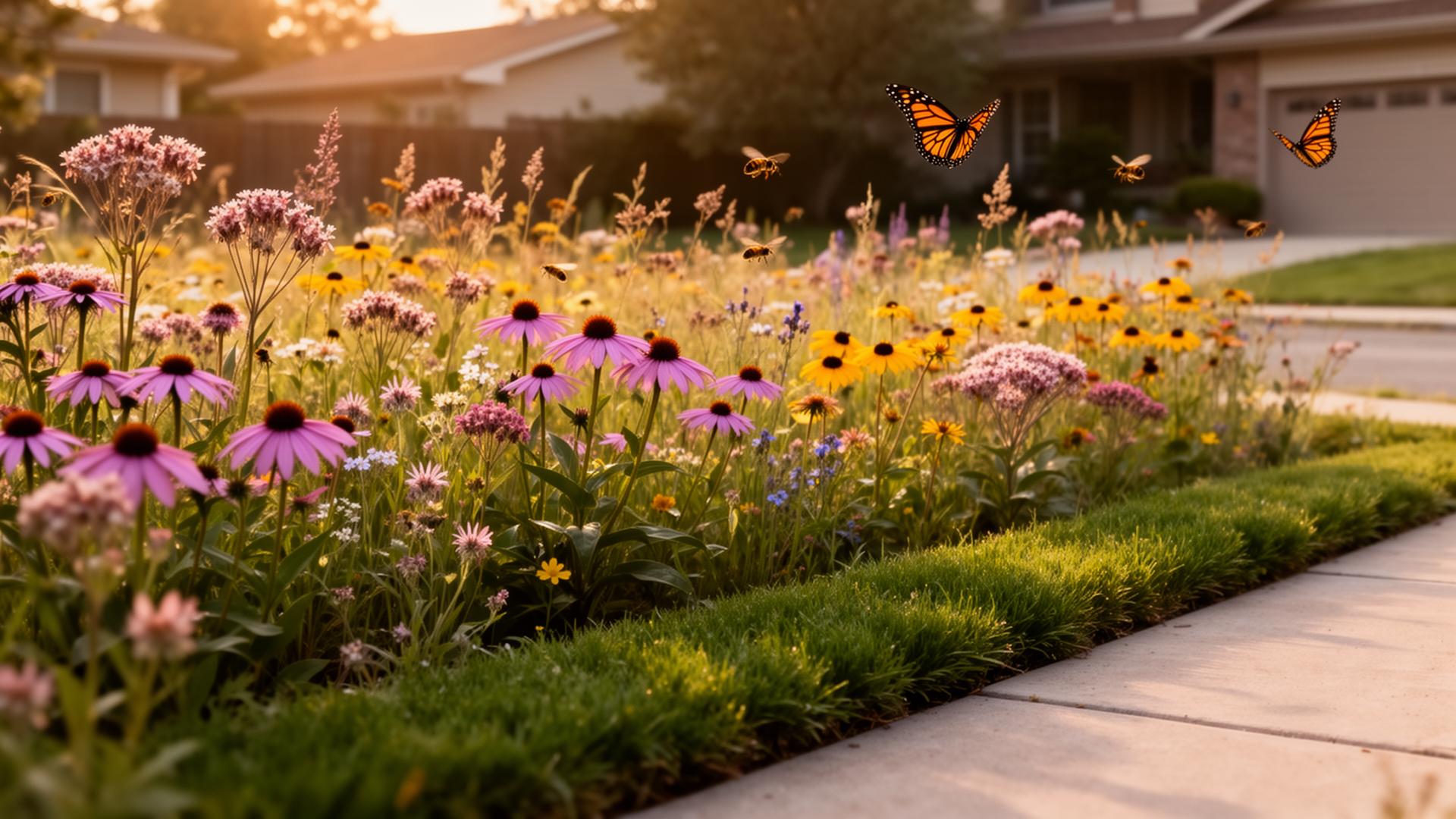
We run your bylaws, CC&Rs, and township ordinance against your property and the yard you actually want.
Groups like Wild Ones and Homegrown National Park have excellent native-plant resources — we are not trying to reinvent that wheel. What we do is the boring, specific work: you send us your actual HOA bylaws, CC&Rs, architectural guidelines, and your town's weed/lawn ordinance. Tell us your address and what you want to plant (or stop mowing). We send back the specific clauses that help you, the ones that hurt you, the state statute that overrides them, and the exact letter to send before anyone complains. Free. If you need more, we can connect you to a lawyer who has handled HOA disputes and, when possible, a homeowner who has already won a case like yours. Townships are especially easy wins — most "weed ordinances" have exceptions nobody knows about.
Need to vent first? r/fuckHOA is great catharsis — but it's strangers on the internet, not legal analysis. Come back here for the actual document-by-document review of your covenants.
Tired of asking permission? We help homeowners run candidates and flip boards.
Most boards hold the same seats year after year because the same dozen people show up to the meeting. Boards massively underestimate how many neighbors actually disagree with them — because the quiet majority never speaks up and most years it's lemmings voting for lemmings. Here's what we do, free:
- Anonymous neighbor interviews. We contact your neighbors (door-knock script, mailers, or a private link) and ask how they'd vote on native plants, no-mow, water restrictions, and current board leadership. Fully anonymous — we only share aggregate numbers.
- Real turnout math. We tell you how many votes you actually need to win a seat, based on your HOA's quorum rules and the last 3 years of meeting attendance.
- Candidate playbook. Petition templates, proxy-collection scripts, election-rule audits, and a quiet GOTV plan for the people who never show up.
You read about pollinator decline. You watched a No Mow May video. You imagined milkweed, bee balm, and coneflowers swaying where your lawn used to be. Then you remembered your HOA. Or your township's "tall grass" ordinance. Or the neighbor who already complained about your dandelions.
You are not alone, and you are not stuck. Below is the plan — built from state law research, real HOA case outcomes, and a template letter you can adapt today.
The 5-step plan (read this first)
- Find out what actually governs your yard. Three layers can apply: state law, your municipal/township ordinance, and your HOA's CC&Rs (Covenants, Conditions & Restrictions). Read all three before you panic.
- Check if your state protects native plant or "managed natural" landscaping. Many do — see the state-by-state list. Some states (like Maryland, Minnesota, and Florida) explicitly limit what HOAs can ban.
- Design for "intentionality," not wildness. The single biggest predictor of complaints isn't what you plant — it's whether it looks cared for. Add a mowed border, a sign, edging, and visible structure.
- Get ahead of the complaint. A short, friendly letter to your HOA board before you plant flips the dynamic from "rule-breaker" to "engaged neighbor." Steal our template.
- If you get a violation notice, respond in writing, citing the law. Don't ignore it, don't get emotional. Most HOAs back down when you reply with statute citations and photos showing maintenance.
"But my HOA literally requires turfgrass…"
A surprising number of CC&Rs that look ironclad are actually unenforceable under newer state laws. Since 2010, more than a dozen states have passed legislation limiting HOAs from prohibiting:
- Drought-tolerant or "xeriscape" landscaping (e.g. California, Colorado, Nevada, Texas)
- Native plants and pollinator gardens (e.g. Maryland HB 322, Minnesota Stat. §515B.3-102)
- Vegetable gardens in front yards (e.g. Florida Stat. §604.71)
Even where no state law exists, HOAs are usually required to enforce rules uniformly. If the lawn-fanatic two doors down has a dead patch from his dog and got no letter, that's a defense.
No Mow May specifically
The biggest legal risk with No Mow May isn't your HOA — it's your municipality. Many towns have a "tall grass and weeds" ordinance capping grass height at 6, 8, or 12 inches. These are usually enforced on complaint only.
Practical workarounds:
- Mow a 2–3 foot border along the sidewalk and driveway. This single move resolves ~80% of complaints because the yard reads as intentional.
- Put up a small sign: "Pollinator habitat — Xerces Society / Homegrown National Park member." Signs reduce complaints dramatically.
- Consider Slow Mow Summer instead — mowing every 2–3 weeks at 4" height. The research (Lerman et al., 2018) shows it actually produces more bee diversity than No Mow May without triggering ordinances.
Where to go from here
- Your rights against an HOA — in plain English
- No Mow May without getting fined
- State laws that protect native landscaping
- Free template letter to your HOA
- Frequently asked questions
You are not asking permission to break a rule. You are asking your neighbors to recognize that the rule was written when nobody knew the bees were dying.